What “mobile” means
A mobile locksmith brings the whole job to you. There's no counter to visit and no address to drive to. You call with the year, make and model and the problem, get a quote by phone, and a technician drives to you. Keys are cut and programmed on the spot, and every key and button is tested before the technician leaves.
This matters most with car keys. If your only key is lost or broken, the car can't go anywhere under its own power, and a locksmith who works at the car saves you the tow.
When you need it, the same service vehicle handles home and business locks too: house lockouts, rekeying and lock installation.
What's in the service vehicle
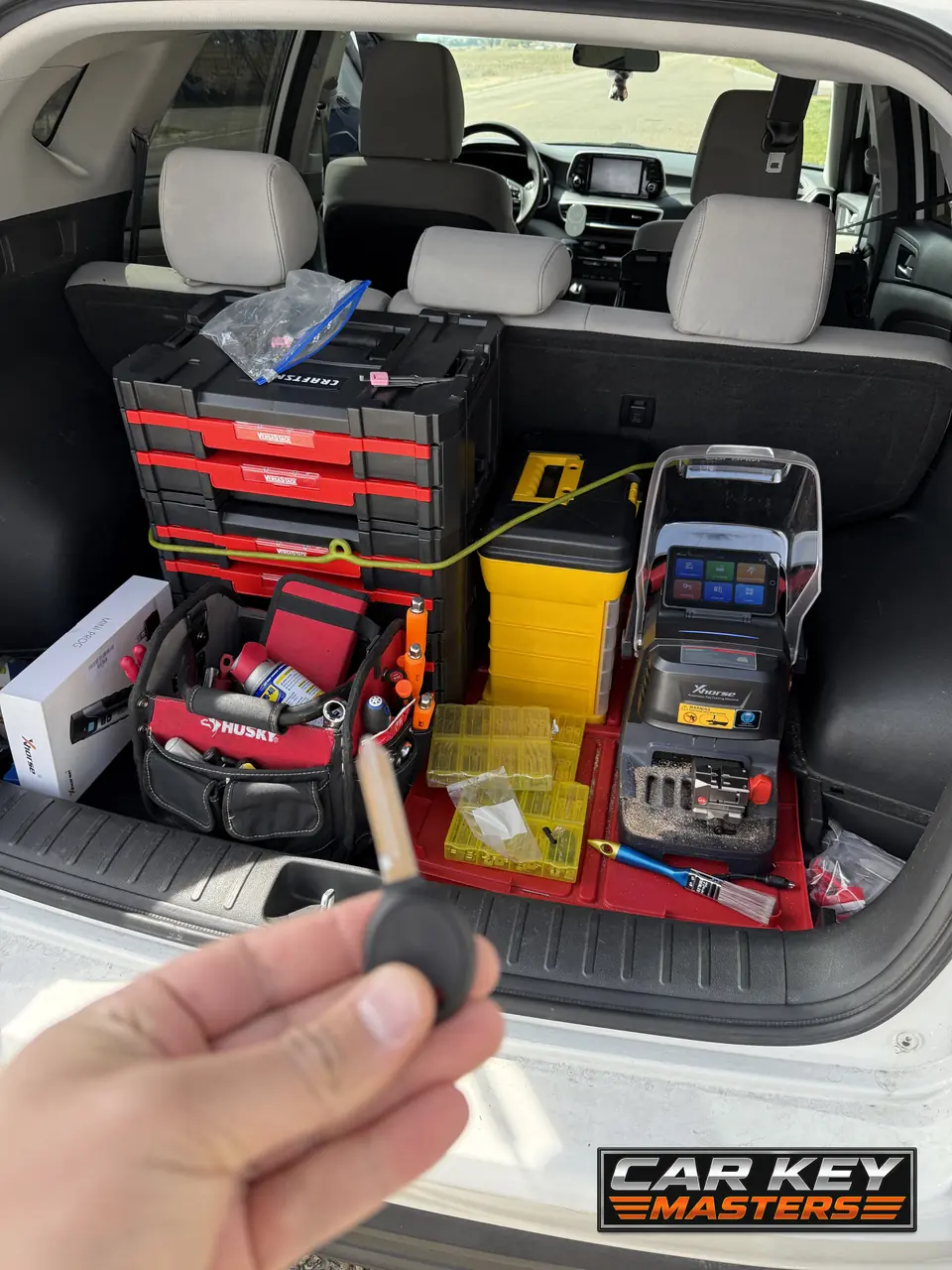
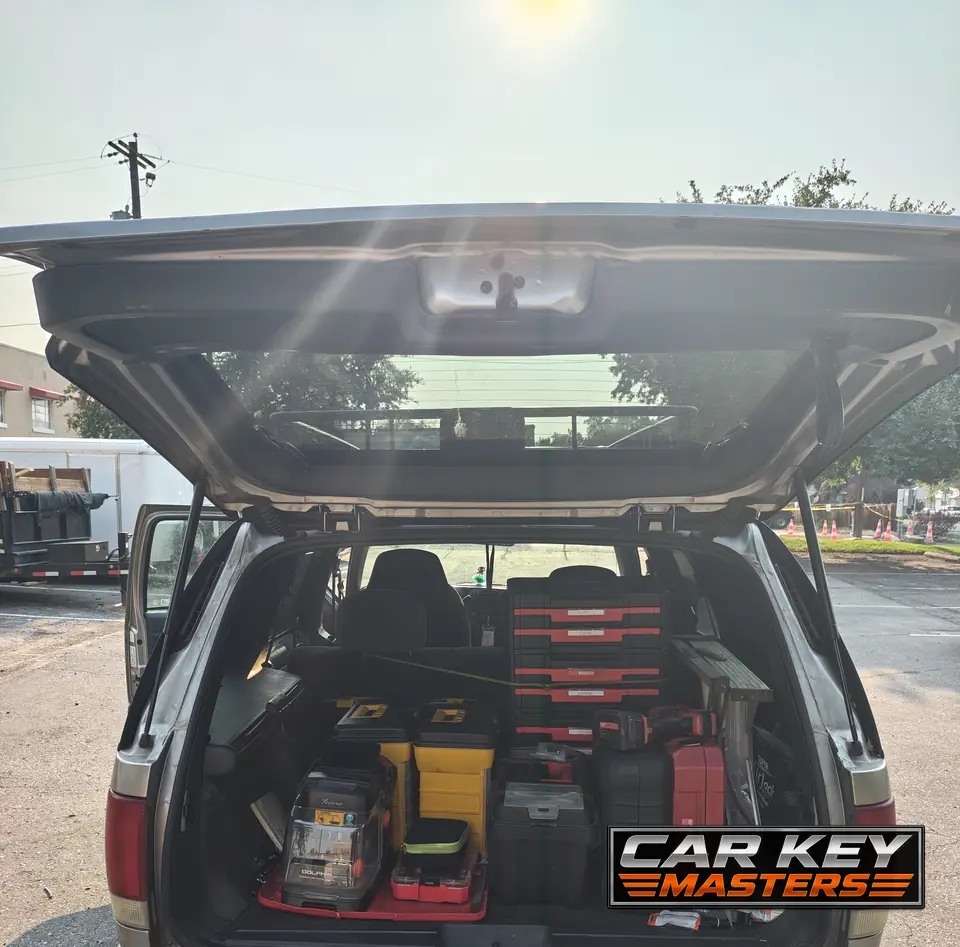
The photo on this page shows the open rear hatch. Here's what's packed in there, and why each piece matters:
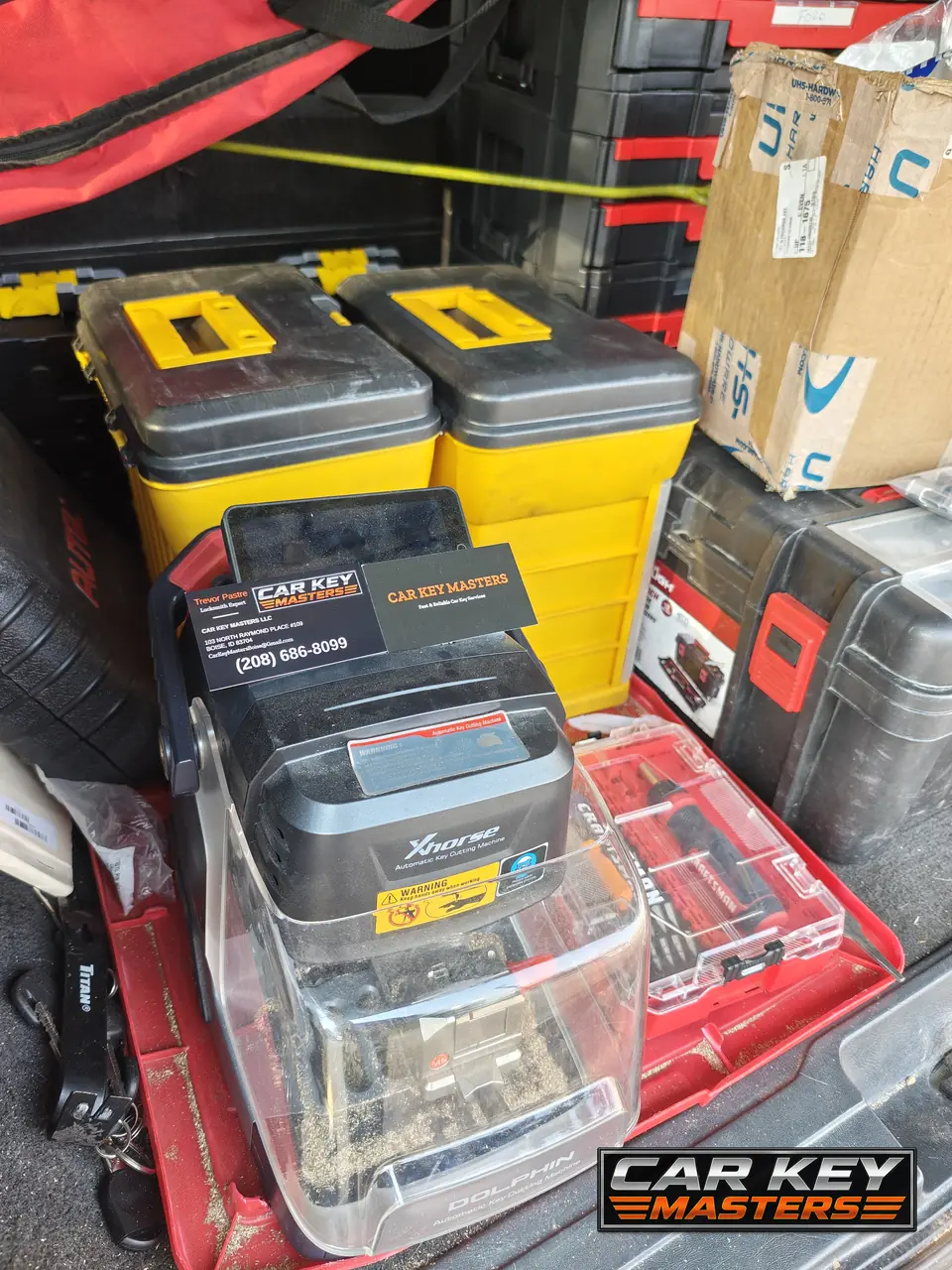
- Key cutting machine. Cuts car and house keys right beside your vehicle, so there's no trip to a shop for the metal part of the key.
- Key programmers, including the Autel IM608. These connect to the car's computer to add new keys, and to erase lost keys so they no longer start the car.
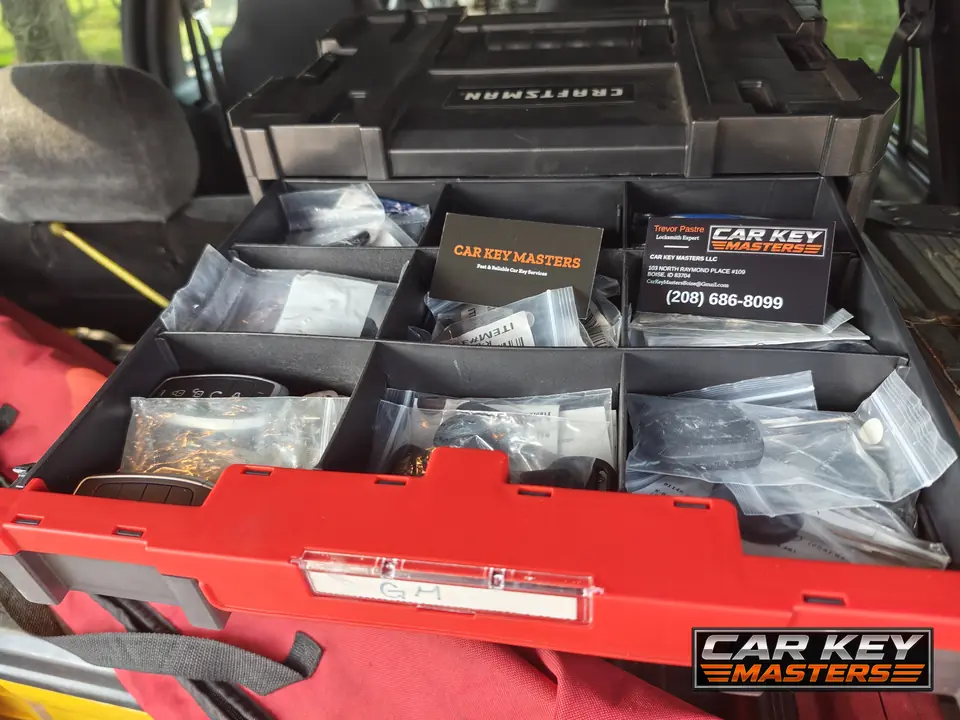
- Drawers of key blanks for most makes and models.
- Entry tools: inflatable air wedges and long-reach tools that open a locked car without damage.
- Lishi-style pick and decoder tools. These open a lock and read its cuts, which is how a new key can be made when no key exists.
- A rekey pin kit for changing house and business locks to a new key on site.
- A jump pack. Programming needs steady battery voltage. If a tired car battery dips in the middle of programming, the job can fail, so we bring our own power.
Where the jobs happen
Jobs happen wherever the problem does. A few common spots, and what helps at each:
- Home driveways and apartment lots, from the North End to Downtown Kuna. Tell us where the car sits if it's not right out front.
- Workplaces. You'll need to step out for the ID check and to test the keys, but you don't need to take the afternoon off.
- Downtown Boise parking garages. Give the garage, level and space number, and mention any height limit at the entrance. Signal is often weak underground, so call from near the ramp or the street.
- The Boise State University area. Lots fill up on event days. Tell us which lot, and allow extra time when there's a game or concert.
- Trailheads and parks, such as Table Rock, the Boise River Greenbelt and Eagle Island State Park. Call from wherever your signal is strongest and describe exactly where the car is parked.
- Boise Airport parking. Back from a trip with a dead fob or no keys at all? Note the lot and row before you call.
- Roadside on I-84, Eagle Road, Chinden Boulevard or Highway 55. Get to a safe spot away from traffic first.
Mobile locksmith or the dealer?
For a lost or broken car key, the dealer is the other usual choice. Here's how the two compare:
- Getting the car there. A dealer needs the car on its lot, and with no working key, that means a tow. We work wherever the car is sitting.
- Waiting. Dealer service departments often book days out, and some have to order a key before they can make one. We come to you, typically within 15–45 minutes in the Boise metro.
- Cost. A mobile locksmith is often less than a dealer visit plus a tow. You get a quote by phone before anyone drives out.
- The exceptions. Some vehicles, especially brand-new models, can need parts or software only a dealer has. If yours is one of them, we'll tell you on the call instead of making the trip.
Weather and working outdoors
Mobile work happens outside, so Treasure Valley weather is part of the job. Cold mornings weaken car batteries, one reason the jump pack rides along. Cold drains fob batteries too, so a remote that was weak in the fall often quits on the first freezing day.
In summer, a car parked in the sun gets hot inside fast. If a child or pet is locked in a car on a hot or very cold day, call 911 first. For more weather tips, see our emergency locksmith guide.
What to have ready
- Year, make and model, and how the car starts: a metal key in the ignition, a flip key with buttons, or push-button start with a smart key.
- Photo ID and proof of ownership. For a car, the registration or title. For a home, an ID with that address, or a lease or utility bill. For a business, proof that you're authorized.
- Every key you still have. On many cars, adding a key means the existing keys get programmed again, so bring them all. Lost keys can be erased so they no longer start the car.
- An exact location: the address, garage level, parking row or trailhead name.
- A key you bought online, if you want to use it. We check compatibility first, but third-party keys don't always work, so we can't promise yours will.