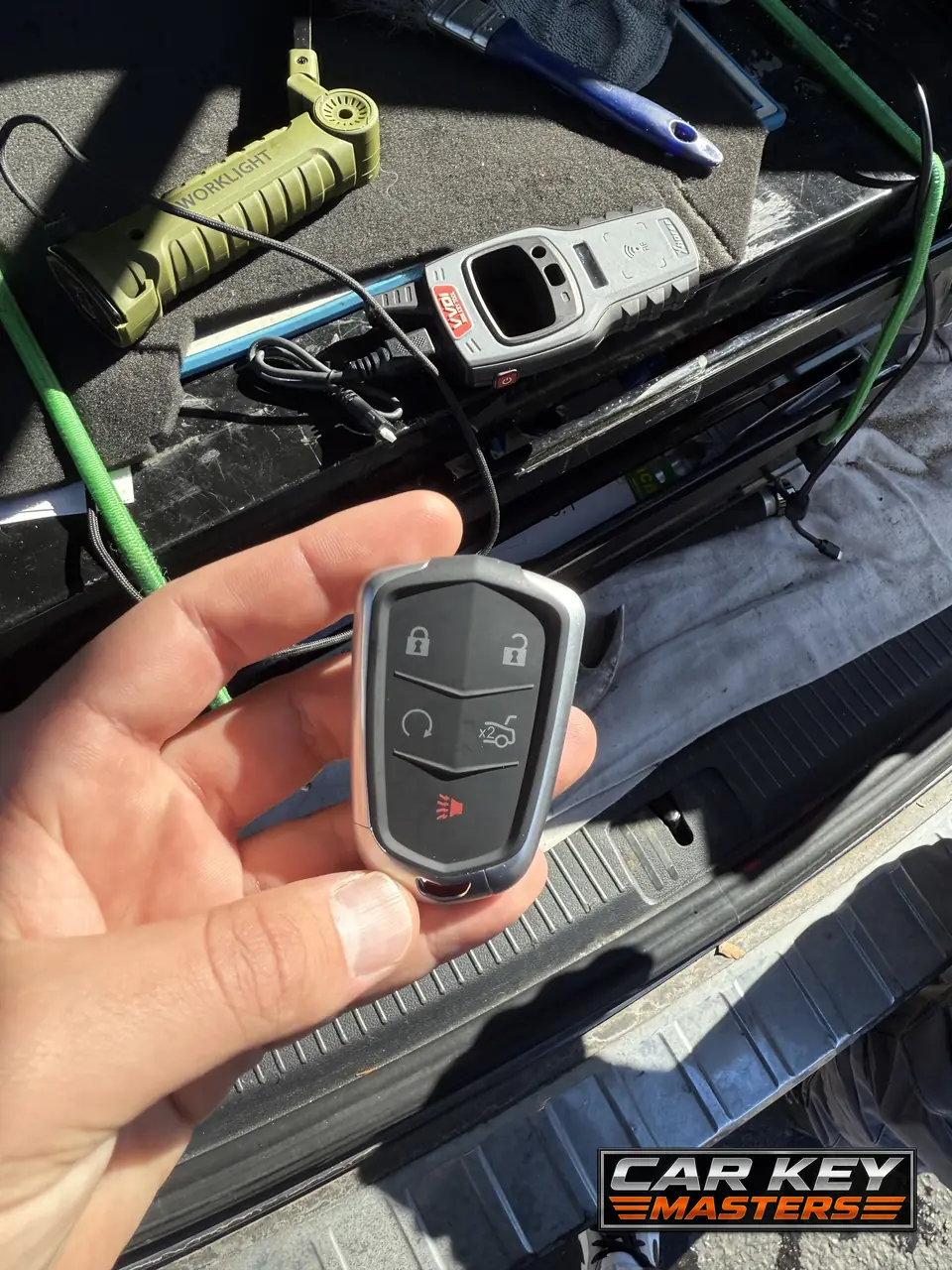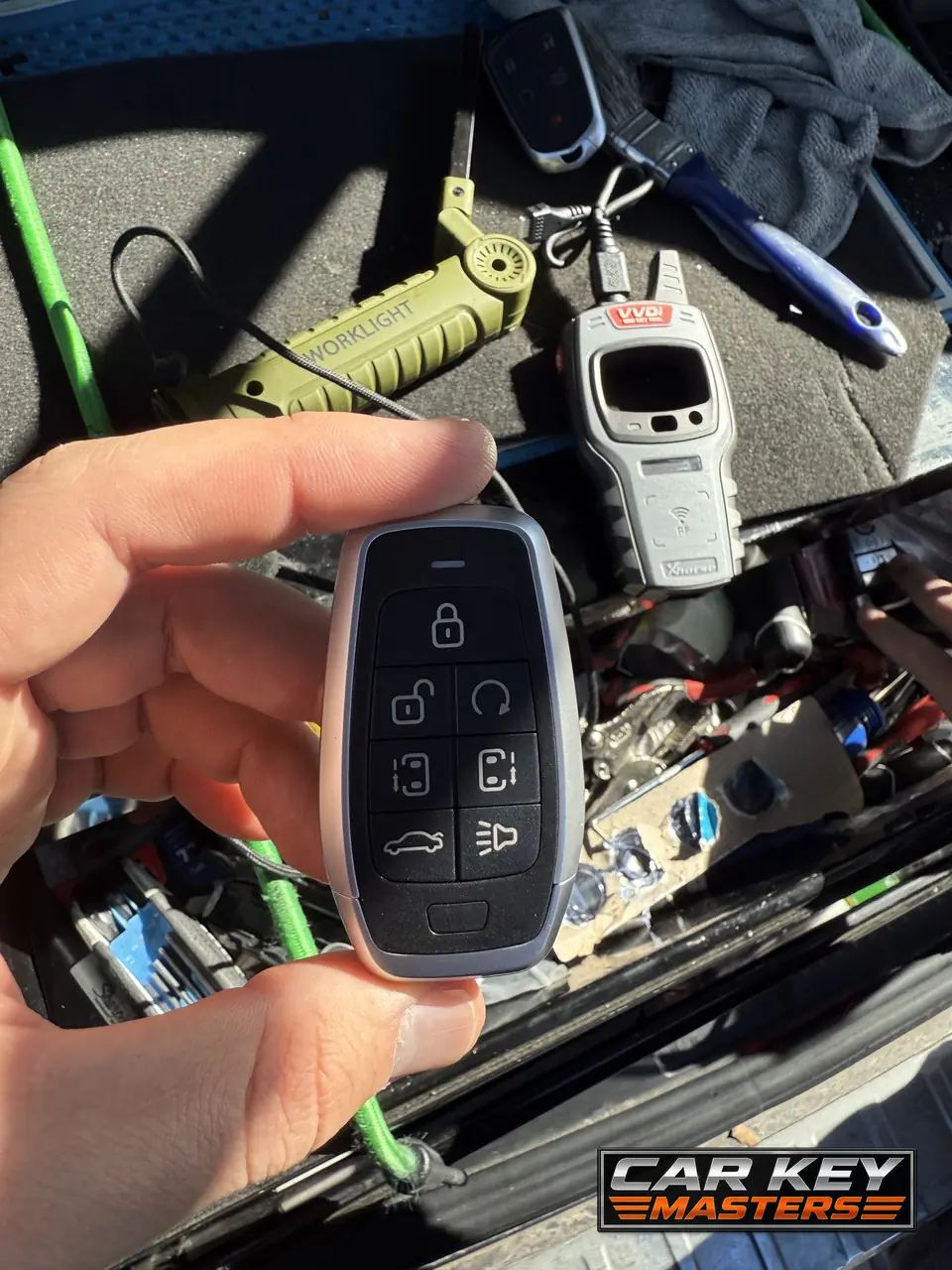
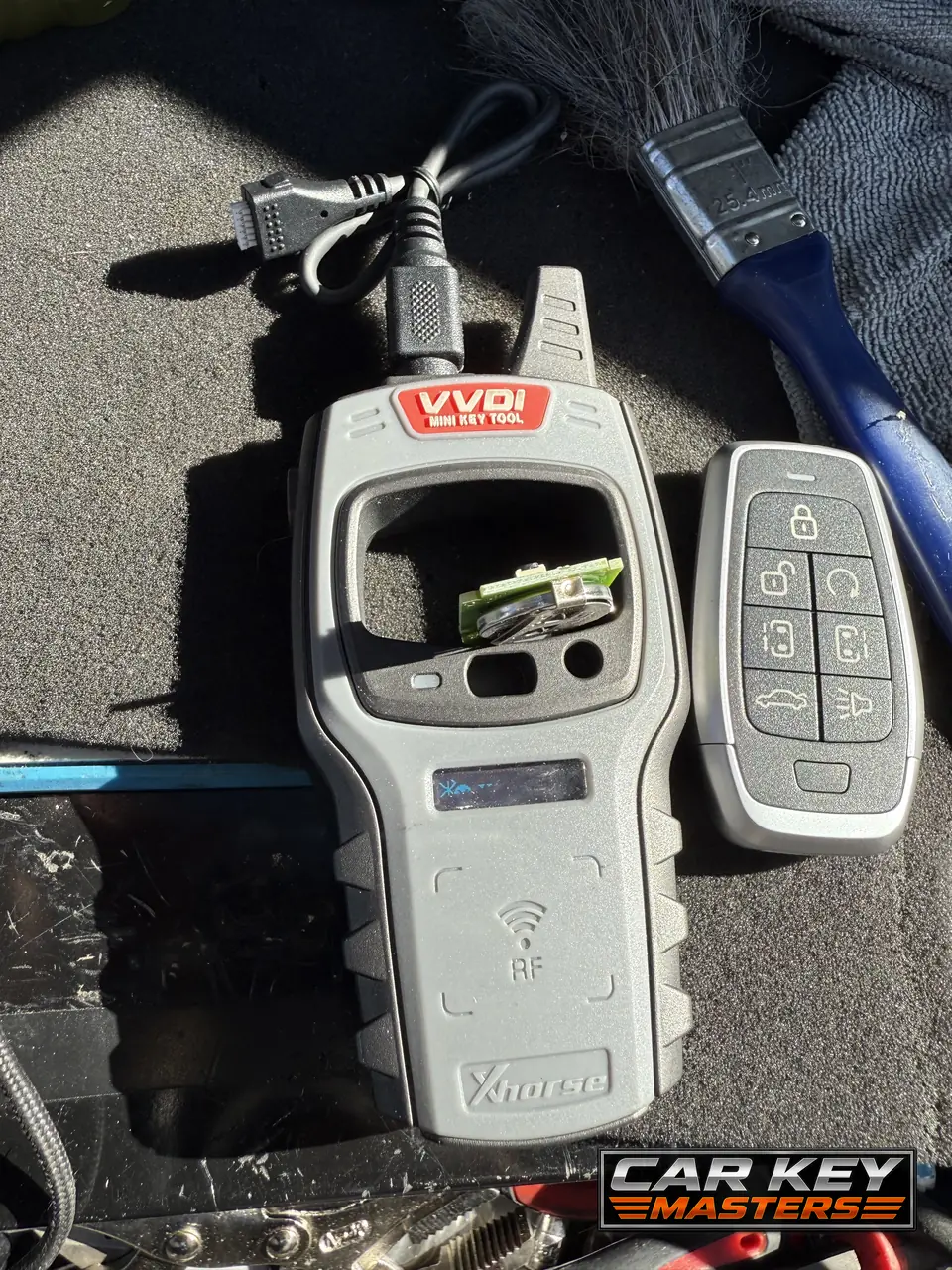
What car key cloning is
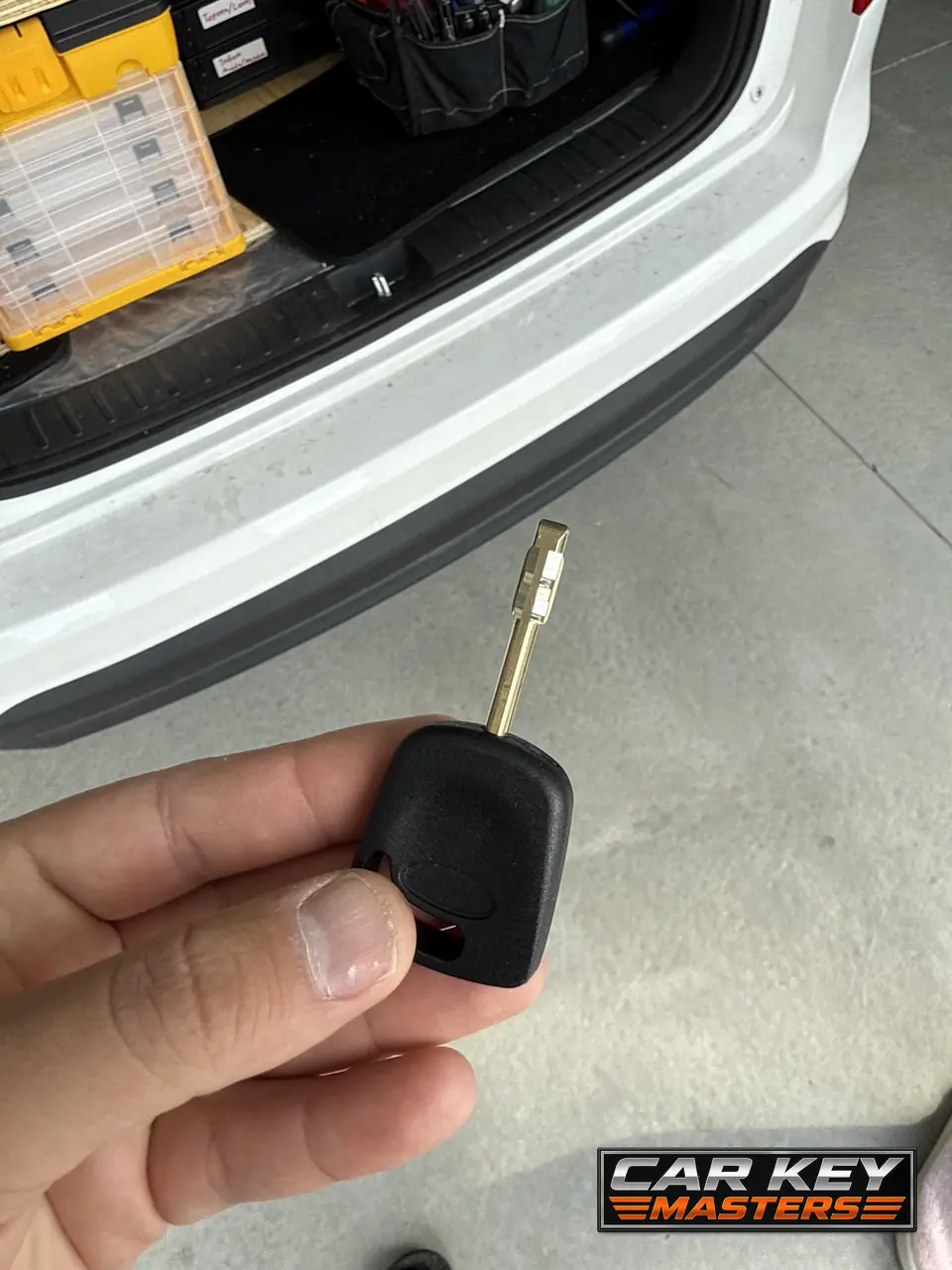
Most car keys made in the last couple of decades have a transponder chip in the head. When you turn the key, the car reads that chip, and if it doesn't recognize it, the engine won't run. Cloning reads the data from your existing chip and writes it onto a new chip in a new key.
Because the new chip carries the same identity as your original, the car treats them as the same key. We don't add anything to the car's memory. That's the main difference from car key programming, where the car learns a new, separate key.
When cloning works, and when it doesn't
Cloning works well on many vehicles with transponder keys, especially older and simpler systems. It's a quick way to make a spare key when you have one good key and don't need anything changed in the car.
It doesn't work on everything. Many newer vehicles use encrypted chips that can't be copied this way, and smart keys for push-to-start cars are generally registered through the car instead. In those cases, we program a new key on board the vehicle. You don't need to know which applies: give us the year, make and model and we'll tell you before we drive out.
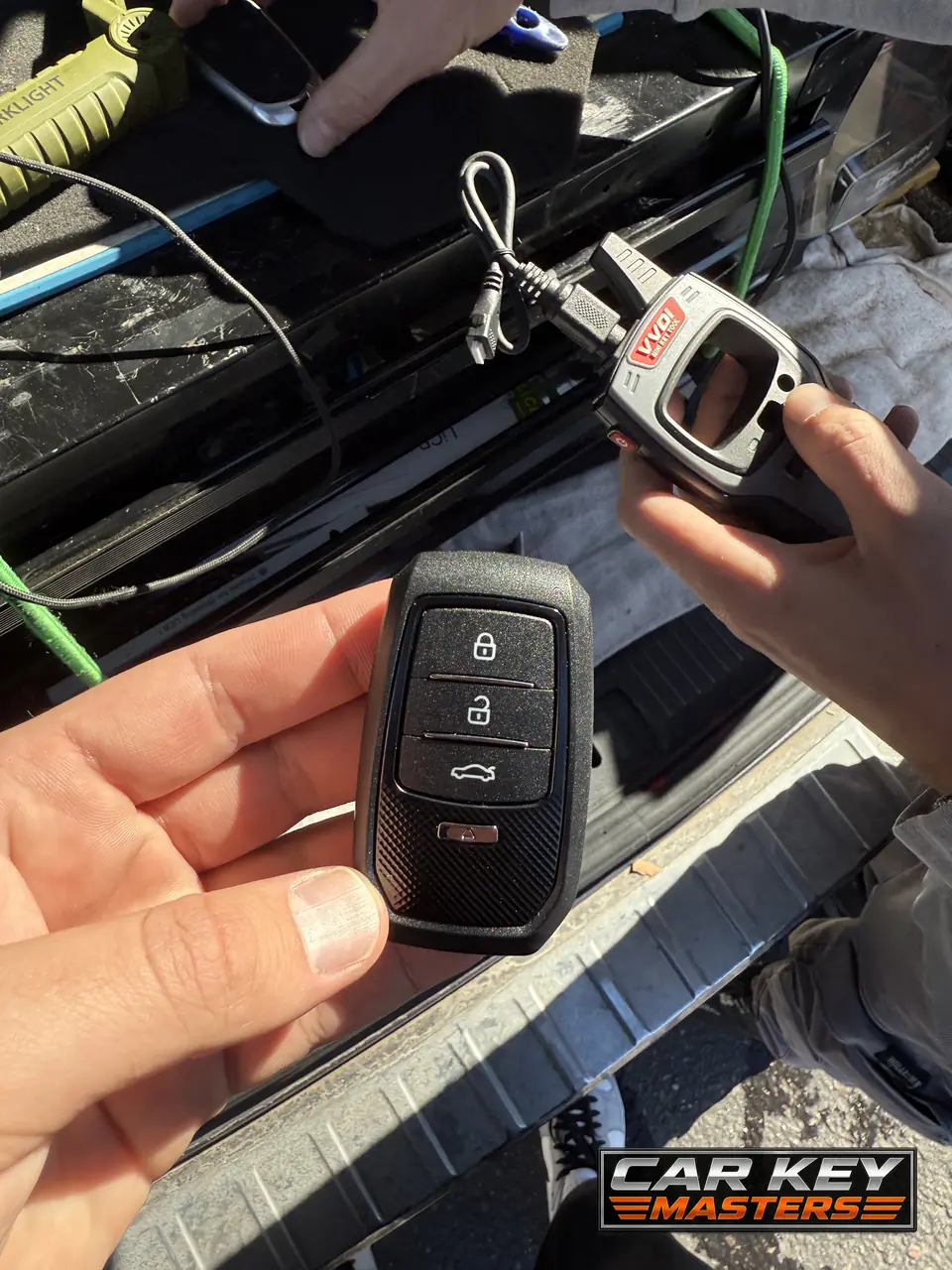
What cloning copies, and what it doesn't
- It copies the chip, the part that lets the engine start.
- It doesn't copy remote buttons. On a remote-head key, the lock and unlock buttons are paired separately, and we handle that as part of the job when the vehicle allows it.
- It doesn't cut the blade. The metal part is cut on our machine from your key or by code. See car key cutting.
- It needs a working original. Cloning reads an existing chip, so it can't help when every key is lost. That's car key replacement.
Cloning vs. programming: a security note
A cloned key shares the original's identity, so the car can't tell them apart or remove one without the other. If you later lose the original and we erase it from the car's memory, the clone stops starting the car too.
Programming gives each key its own place in the car's memory, so a lost one can be erased while the rest keep working. If several drivers share the vehicle, or keys tend to go missing, programmed keys may be the smarter choice. We'll explain the options for your vehicle.
What to have ready
- The working key you want cloned
- Year, make and model, and where the vehicle is parked
- A photo ID and the registration or title. We check both before making any key
We're available 24/7, weekends and holidays included, and typically arrive in 15–45 minutes in the Boise metro, depending on location and traffic. Before we leave, we test the new key in the doors and ignition, and every button.