Can a broken key come out without replacing the lock?
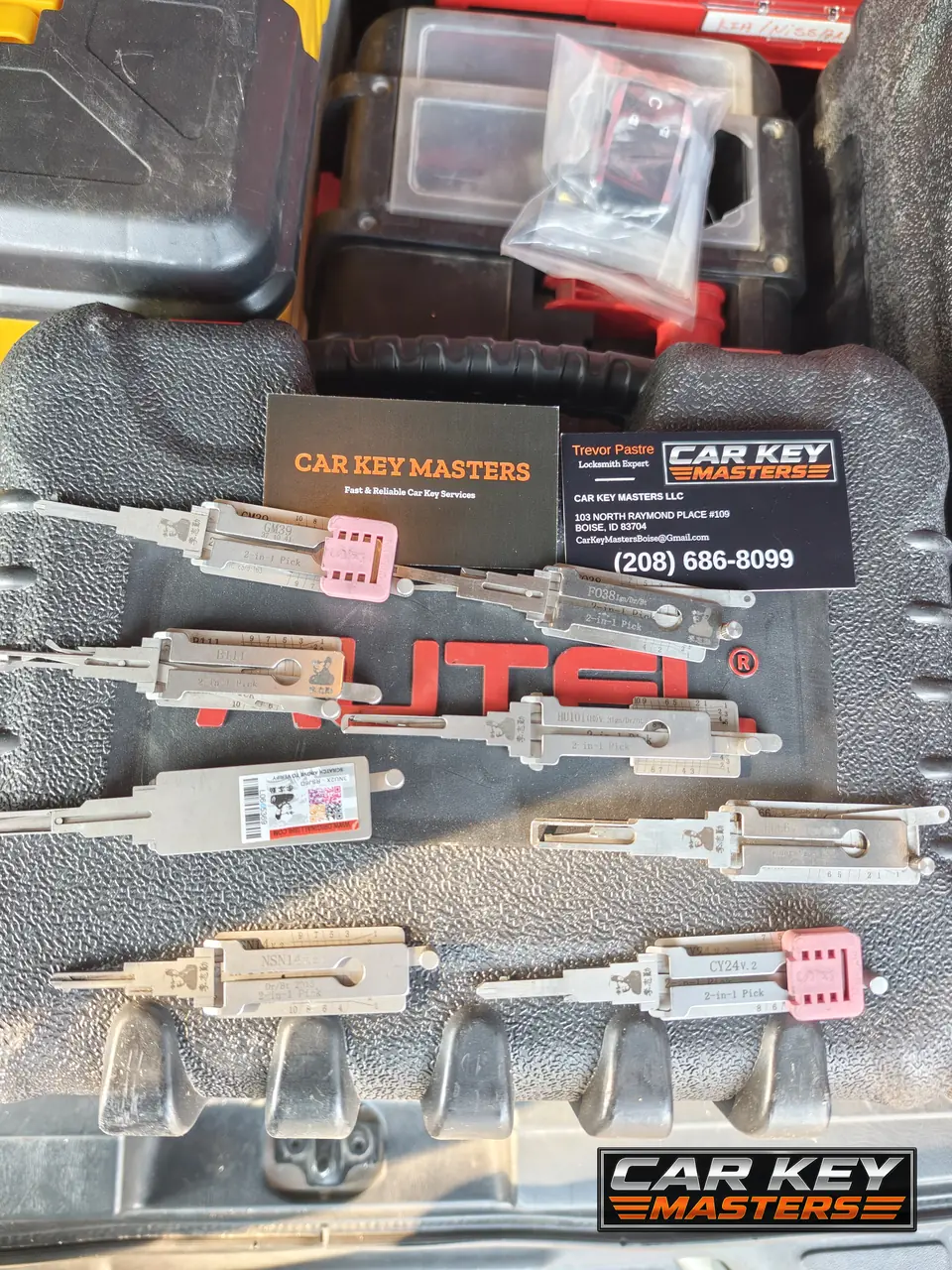
Usually, yes. Extraction tools are thin steel blades with tiny hooks or teeth. The technician slides one along the side of the broken piece, catches the cuts on the blade and draws it straight out, without forcing the parts inside the lock. A lock that worked before the key broke is often fine afterward.
If the lock was already worn or jammed, which is often why the key broke, we'll show you what we see and explain any extra work and price before doing it.
Why keys break
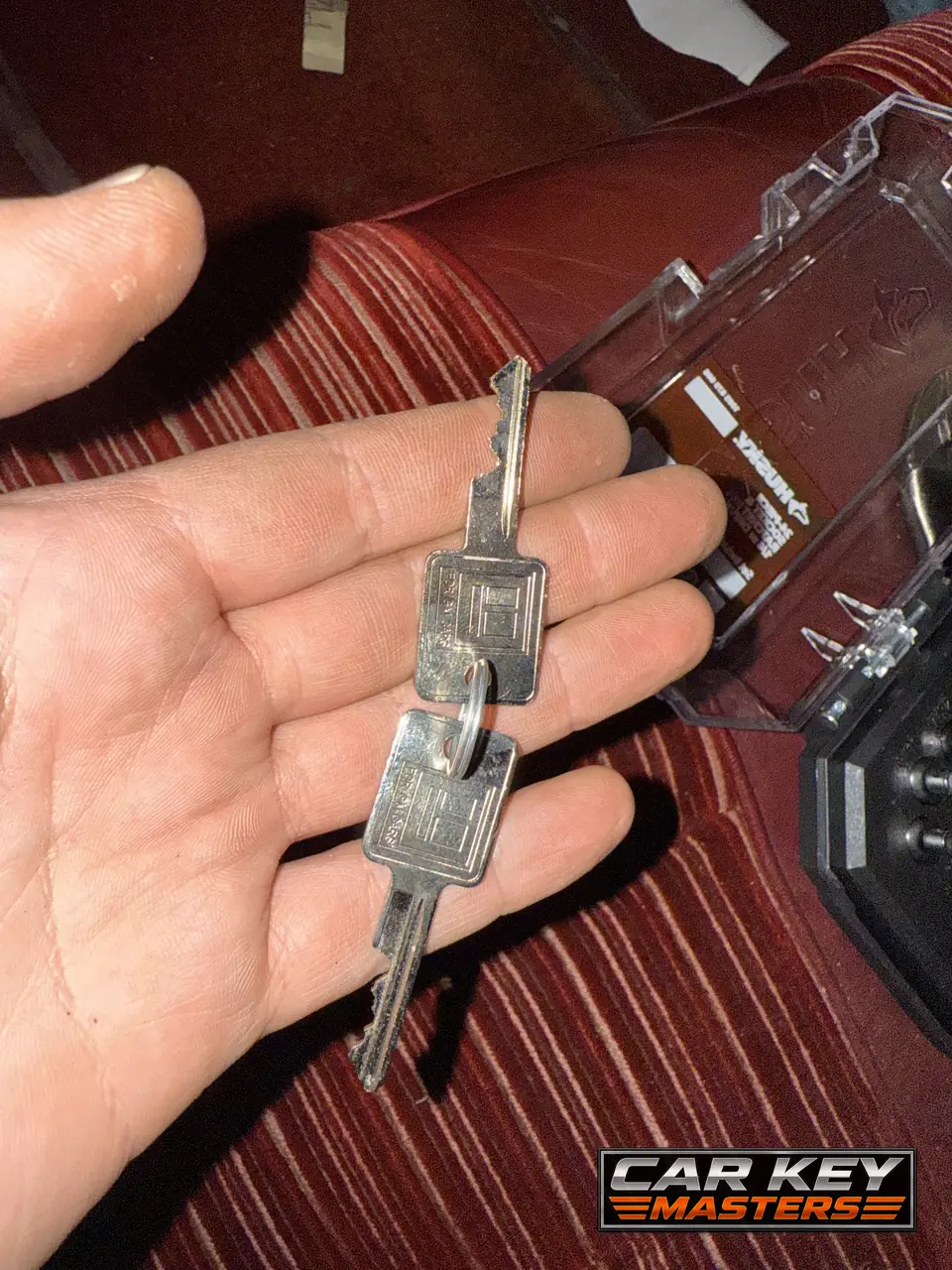
- Worn keys. Years of use thin the blade at the shoulder, right where it meets the head, until metal fatigue finishes it.
- Locks that stick. A worn or dirty lock makes you twist harder, and the key gives way before the lock does.
- Forcing a frozen lock. On cold Treasure Valley mornings, moisture in a door lock freezes. Twisting harder snaps the key; lock de-icer and a little patience work better.
- Using the key as a lever. Prying open a box with a car key, or a heavy keychain swinging from the ignition, bends the blade over time.
What not to do
- Glue. A dab of super glue on a matchstick or the broken half sounds clever, but glue runs into the lock and can cement the piece in place for good.
- Pliers or tweezers. They rarely grip the piece and often push it deeper or bend it inside the keyway.
- A screwdriver to turn the lock. That can break the lock's internal parts and, in an ignition, turn a simple extraction into ignition repair.
- Pushing with the other half. Using the head to push the piece back in usually wedges it tighter.
If part of the key sticks out far enough to pinch with your fingers, pull gently straight out. If it doesn't come with light pressure, stop and call (208) 686-8099.
A new key from the broken pieces
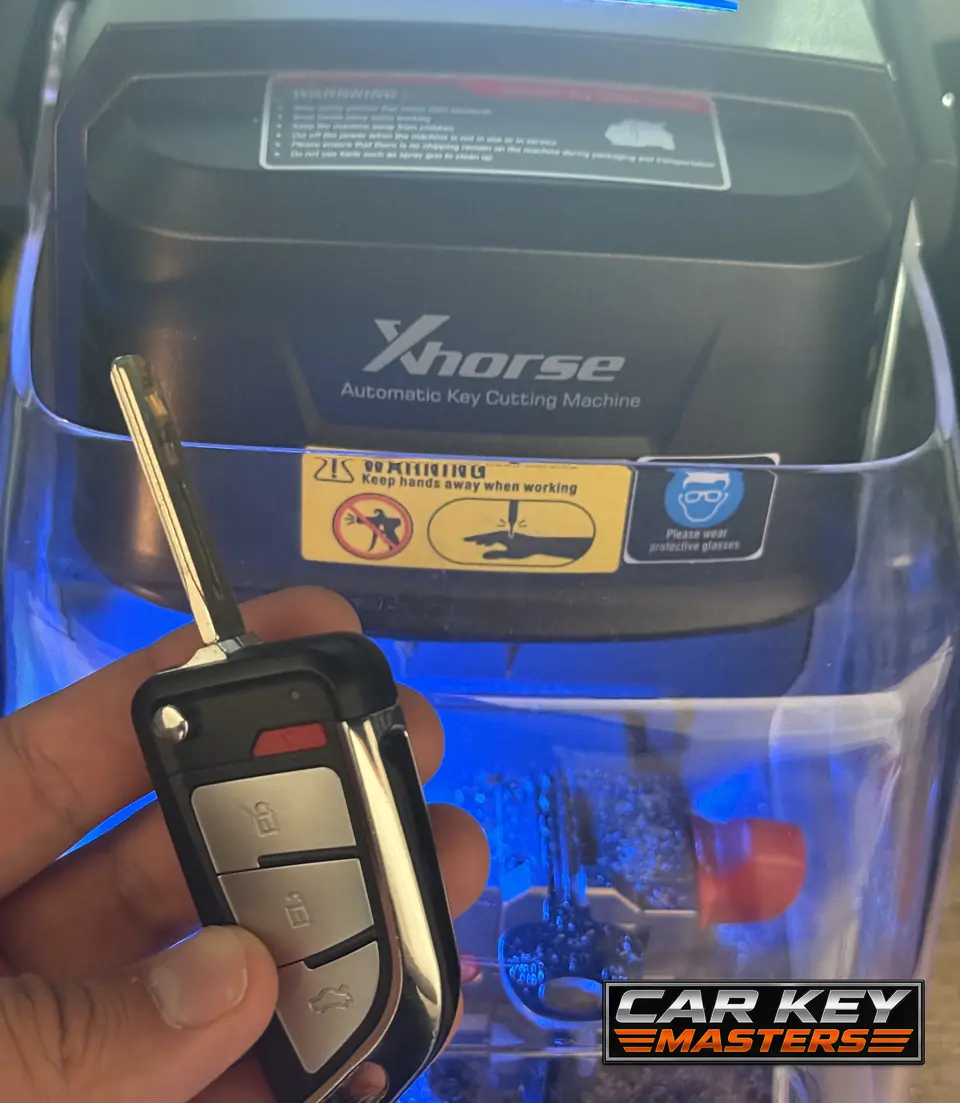
Once both pieces are out, we line them up and read the cuts. If the blade is too damaged to read, our decoder tools can read the lock instead. The new blade is then cut on our key cutting machine, the same way as car key cutting.
If your key has a transponder chip in the head, a new blade alone won't start the car. The chip side is handled by programming a new key or, on some vehicles, cloning the chip from your original. Keep the broken head, since the chip inside it matters.
Checking the lock afterward
Keys rarely break for no reason, so we look at the lock once it's clear. We try the new key in the doors, ignition and trunk, make sure it turns smoothly, and tell you if a cylinder is worn enough to stick again.
If the ignition needs work, we explain whether the cylinder can be rebuilt or should be replaced, and the price, before going further.
How it works
- Call with the detailsTell us the vehicle, where the key broke and whether you have both halves. We quote it by phone.
- We come to youWe're on call 24/7. Typical arrival in the Boise metro is 15–45 minutes, depending on location and traffic.
- Extract the pieceThin extraction tools draw the broken part straight out of the lock.
- Cut and programWe cut a new key from the pieces and set up the chip if your key has one.
- Test the lockWe try the new key in every lock it should open before we leave.